Showing posts with label Gairloch. Show all posts

Sunday, 22 July 2012

Dragon hunting, Part 6

Our last full day in the Gairloch area started promisingly enough, with dolphins in the bay before breakfast. They even managed to prise Second Born from her slumbers, several hours ahead of schedule. Believe me, this was a hugely impressive feat.

Not the fat orange dolphin on the right... the other two...

PJs, dressing gown, mug of coffee, bins. That's my girl!
Even the Salmon were impressed. Or they could've been trying to stay out of the way of the dolphins.

Salmon, Salmo salar (I think. They look very different when not in a tin)
Fittingly for the last day of a holiday, Second Born was going to climb a mountain, or at least a very big hill. So once suitably attired, we set off for Beinn Eighe NNR once more, where the 6.5km, 550m of climb, Mountain Trail beckoned.

The Admiral and I planned to accompany her to the edge of the tree line, before retracing our steps and attempting the much less daunting Woodland Trail, meeting up with Second Born again during her descent.

Once Little Miss Hiker had climbed beyond our ceiling, we returned, at a much more leisurely pace, to the car park by Loch Maree, stopping en route at every conceivable wildlife opportunity.

Common Darter, Sympetrum striolatum

Round-leaved Sundew, Drosera rotundifolia

Not sure which species of spider this is. To be honest, my eye had been drawn to the silk bundles on the rock and I didn't even notice the spider until checking the photo. Pretty amazing camouflage!
By the time we started the Woodland Trail, the sun was making its presence felt. The clearings on our route yielded several species of damsel and dragon, notably Large Red Damselfly, Golden-ringed Dragonfly, Northern Emerald and Common Hawker. And I finally resigned myself to not seeing a male Azure Hawker on this trip. After meeting up again with Second Born, we descended through a belt of heather and bracken. Here we came across a species of burying or sexton beetle, Nicrophorus vespilloides, and again I had a shock when checking the photo.

Look at the large orange patches...
Whether the mites were deliberately camouflaging themselves against the orange section of the beetle's wing cases, I do not know.

Near the bottom of the hill, there were a few photo opportunities with Golden-ringed Dragonflies. A male, perched on the heather at the side of the path, allowed us to walk right passed without a flinch.

Cordulegaster boltonii (male)
The biggest dragon in the UK is the female Golden-ring, and this lady was the first of her gender that I've been able to photograph.

Cordulegaster boltonii (female)
As a reward for her endeaavour, we treated Second Born to a cream tea at the Whistlestop Cafe in Kinlochewe. The Admiral came close to not receiving his, as he insisted upon calling his scone (as in skonn) a scone (as in skone). The young Scottish waiter was distinctly unimpressed in a very dry-humoured kind of way, "We hev nee ony skones, only skonns, but even if we did hev ony skones, I still widna gie yee wun!"

And that was that, seven days of searching for the elusive Azure Hawker, with only one positive sighting yielding a photo. It'll need another trip, I reckon.

Over the next two days, the journey back to England and the wet weather was punctuated with a couple of natural history stops. The first at Loch of the Lowes, near Dunkeld, where we saw Ospreys and a Red Squirrel. The second at RSPB Leighton Moss, where we saw a Marsh Harrier and a Black-tailed Skimmer.

As I write this, several weeks later, the jet stream has resumed normal service. The drought that was affecting north west Scotland has final ended and summer has returned to England. So we were very lucky in that respect indeed.

I&T random foodie statistics:

Servings of carrot cake 2
Servings of haggis 3
Skones 0

Thursday, 19 July 2012

Dragon hunting, Part 5

View of Gairloch Bay - fog
Thursday saw a lazy start to proceedings due to the fog blanketing the bay. However, once the far shore could be seen, we set forth for Slattadale to resume our search for Azure Hawkers.

Whilst we managed to find Common Hawkers, Golden-ringed Dragonflies, Common Darters, Northern Emeralds and Large Red Damselflies, there was no sign of our target species. Sigh.

Northern Emerald, Somatochlora arctica
We took the decision to drive south east, along the shores of Loch Maree, to the Beinn Eighe NNR, where we had seen one female A. caerulea on Sunday. Again, there were plenty of odes, this time including Four-spotted Chaser and Common Blue Damselfly, but no confirmed Azure Hawkers.

Fortunately, other natural history treats included...

Oblong-leaved Sundew, Drosera intermedia
Long-tailed Tit, Aegithalos caudatus
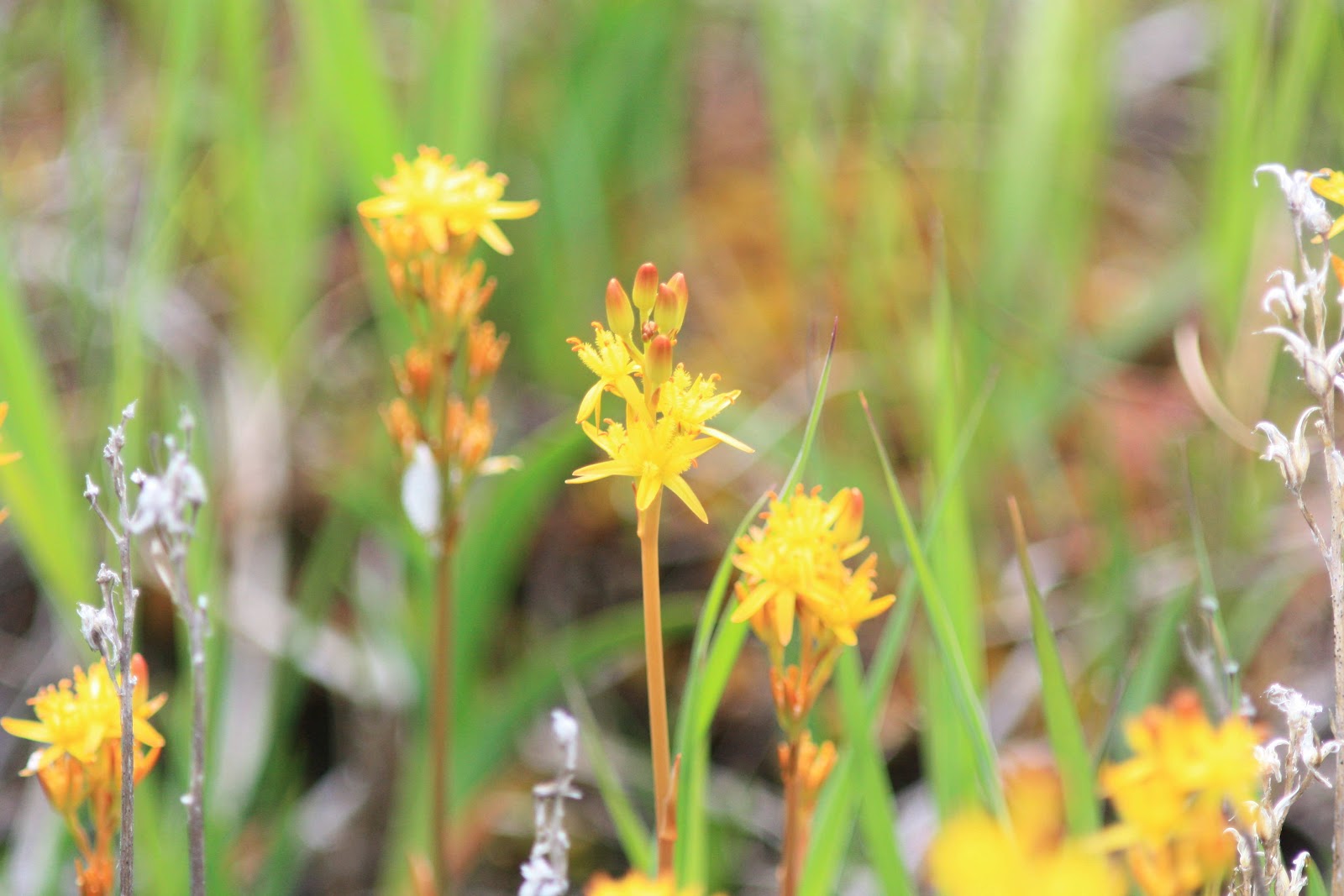
Bog Asphodel, Narthecium ossifragum
And the eponymous mountain, Beinn Eighe
We nipped down the road to Kinlochewe for a late lunch in the Whistlestop Cafe, before returning to the reserve to persevere with the quest. More disappointment, this time echoed in the hills by darkening skies, which heralded an approaching storm. Rather than risk another drenching, we drove back to Gairloch and sat outside the cottage, watching as the storm traversed the bay, punctuated by flashes of lightning and rumbles of thunder.

In the evening, we admired the ever-changing cloudscape and pottered on the shore.

An aquatic woodlouse, Ligia oceanica

Tuesday, 17 July 2012

Dragon hunting, Part 4

This one, I must confess, isn't so much about dragon hunting, unless you're in possession of an old sea chart of The Minch, the stretch of water between the coast of north west Scotland and the Outer Hebrides. This ancient map might show some terrible winged serpent rising from beneath the waves, its sinuous body ensnaring a doomed sailing vessel in a timber-crunching embrace, while the hapless crew abandon ship, uncertain of their fate.

OK, I may have eaten too much smoked cheese.

The day dawned with a warm breeze blowing from on shore. The Admiral and I walked around the bay to Gairloch harbour and reported in at the Hebridean Whale Cruises office in plenty of time to don the supplied appropriate clothing. Then, with another 10 excited passengers, we boarded the Orca 1, HWC's RHIB (rigid hull inflatable boat), for a two and a half hour trip out into The Minch.

The previous evening I had been in something of a quandary. What camera kit to take on a whale watching trip? With the RHIB low down in the water, would cetaceans be close to the boat? Close enough for a standard 55mm lens? Or would they be hundreds of yards off the starboard bow, requiring Very Wrong Len and his new friend, Juan Pointfour-Converter? The Admiral, with several Biscay trips of experience to call upon, was firmly of the opinion that size was everything, opting for his 100-400mm telephoto. I wasn't so sure, but then again, I would say that, wouldn't I? In the end, Juan was left at home, Very Wrong Len made the team and a standard lens went into my rucksack, in case I dared carry out a sea-borne transfer.

After the safety briefing and the even more important information that a certain BBC film crew were on a competitor's boat, we sped out into Gairloch Bay with a calm sea and improving light. From reading the tour literature, I knew that our destinations would be several deep trenches in the sea bed where whales are known to feed. But would luck be on our side?

So far during the holiday, we had seen few of the sea birds that we would have expected on a Scottish coast. Now, at last, we spotted Puffin, Guillemot, Razorbill, Fulmar, Kittiwake, Black Guillemot, Gannet and Storm Petrel. That's better!

The RHIB's complement were distributed in four rows of three. I found myself in the centre of the third row, which meant that my optics stayed dry but visibility wasn't optimal when under full throttle. However, the occasional sea bird drifted overhead as we progressed towards the Isle of Skye, so, as long as I had my wits about me, there was a chance of a photograph. Yeah, right.

Gannet, Morus bassanus
In no time at all, it seemed, we were over a feeding area, the engines were cut and thirteen pairs of eyes meticulously scanned the surface of the sea. Suddenly, a shout went up and we all swivelled around to the indicated direction. A Minke Whale surfaced and then dived again! We waited for it to return to the surface. Would our optics be pointing in the correct direction? At each successive blow (not seen or heard, but definitely smelt), camera shutters fired rapidly. I soon came to realise that taking photographs at sea was a whole different ball game, and not necessarily one where I knew the rules.

Minke Whale, Balaenoptera acutorostrata
We cruised north to a different feeding area and found another Minke, but when this moved off, we maintained a northerly heading and stopped in the wake of a fishing trawler. Here were sea birds aplenty, hoping for an easy meal.

Great Skua or Bonxie, Catharacta skua
Storm-petrel, Hydrobates pelagicus
... and again
We continued to scout for more whales, or the nirvana of sea watching, Orcas, but on this particular occasion, the search proved fruitless. However, we then found ourselves in the middle of a school of about twenty Common Dolphins. It was a big family group, with animals of all sizes. Never far from the boat, it was difficult to bring a 300mm lens to bear. Our captain (and guide) manoeuvred  the boat so that everyone, and every camera, had a view, but I have to admit that most of my shots went into the recycle bin. I finally had the answer to my photography conundrum. Never mind which lens, take several cameras with a different type of  lens attached to each.

Common Dolphins, Delphinus delphis, (with calf?)
The captain radioed the boat that the Beeb film crew were using and they sailed over to our location to grab some footage. I hope they bought him a beer later!

Where's those Cormorants, then?
On the journey back to Gairloch, we had a brief sighting of a Harbour Porpoise, but all too soon our trip was over. It was a fantastic morning and an experience I hope we will repeat before too long.

Second Born then collected two happy chaps from the quay and took us further around the bay to the Badachro Inn for lunch. Afterwards, she drove to Red Point, where we wandered through the dunes to a sandy beach looking across to Skye. Here we snoozed in the heat of the afternoon, a pleasant, contented sleep, conjured up from some sublime cetacean sightings, good food and a pint of An Teallach.

Apparently, it was still raining in England.

Monday, 16 July 2012

Dragon hunting, Part 3

The dry weather continued the next morning, but we didn't start wildlife watching as early as hoped.

Well, in a way, I was wildlife watching. That is to say, there was a delay of a few ticks before we started in earnest. And I don't mean 'a few seconds', I mean actual ticks. Probably sheep ticks, Ixodes ricinus, which are also spread by deer. Yours truly had managed to collect a few exo-parasites the previous day, when trogging through the undergrowth looking for dragons.

If only I could find Azure Hawkers so easily!

Whilst Lyme Disease isn't hugely prevalent in the Gairloch area, there's no point in taking any chances, so I considered it worthwhile checking with the local medical practice. My thanks to Nurse Joan at Aultbea Surgery for her wise words and her tremendous tweezers.

Towards noon, we returned to Slattadale, but the visit proved rather unproductive from an odonatological perspective. We did spot a few Common Darters and some Golden Rings, but the dragons were trumped by the many other invertebrates present. Of which a few examples are below:

Caterpillar of the Emperor Moth, Saturnia pavonia
Green Tiger Beetles, Cicindela campestris, busy making more beetles
In the afternoon, we drove along the peninsula north of Gairloch to Cove, to an area that was under-recorded for damsels and dragons. Under a heavy sky, we searched for suitable habitat, but found little to inspire either us or the odes. Perhaps the area's not under-recorded, it's simply not on dragon radar. Our trip wasn't wasted though, as the Admiral pointed out a group of Lesser Butterfly Orchid, Platanthera bifolia, growing by the roadside. We just had time to take a photograph or two before the heavens opened.

Platanthera bifolia
Meanwhile, Second Born was busy exploring the nearby Inverewe Gardens, so whilst the rain it raineth, we drove around Loch Ewe to meet up with her. She had managed to avoid the weather and we wandered around the carefully tended borders and landscaped woodland, looking for wildlife interest rather than horticultural inspiration. Second Born found the only dragonfly we saw, a Common Darter, just as the Admiral was explaining how he'd never seen anything odontaological in the gardens. Priceless!

We had walked to the far end of the site and were watching a lively heronry when the rain returned. This time we weren't so fortunate and were completely drenched by the time we made it back to our cars for the damp drive to Gairloch.

Following a change of clothing and after the weather had smartened up, we sauntered along the bay to The Shieling restaurant for our evening meal.

View across Gairloch Bay - cloudy
Midway through our first course, another group were shown to the table beside us. This consisted of a certain TV wildlife presenter and his film/production crew. Let's preserve his anonymity, as the loud conversation revealed that he didn't know his Cormorants from his Black-throated Divers. The Admiral was decidedly unimpressed.

That notwithstanding, this team settled into regaling each other, and anyone in earshot, with wildlife-filming horror stories, comparing diseases and parasites contracted in all corners of the globe. It put my ticks into perspective, I can tell you. Though it did make me think, well, if it was so bad, why didn't they stay in the UK and brush up on bird ID.

To be honest, it wasn't the lurid detail of their anecdotes that bothered me. I would've happily eaten tagliatelle whilst the chat was of tapeworms. What irked most was the revelation of the sheer amount of travel undertaken in the name of light entertainment for the masses. OK, all the film crews in all the world will only make up a small fraction of global air travel. But for folks who profess to love nature and wish to preserve it for future generations, their life style appeared to be more concerned with what looked good on a CV rather than protecting any sea 'vie'. Sorry, rant over.

As we reached the dessert course, it became apparent that this bunch were spending the next day at sea, whale-watching. The Admiral's face was a picture when he realised this, as so were we. Same boat? Oh, please, no!

We gently ambled back to our lodgings, each in our own thoughts, contemplating what the next day might have in store for us. With the arrival of dusk, the view had returned, so we crossed our fingers and hoped for fine weather.

View across Gairloch Bay - dusk

Sunday, 15 July 2012

Dragon hunting, Part 2

Monday proved to be a warm, sunny day, so the Admiral and I set off early to visit Slattadale on the southern shore of Loch Maree. Even at this latitude, there were dragons on the wing at 09.30, Common Hawker and Golden-ringed Dragonfly mainly.

There were a few sightings of possible Azure Hawker, but nothing at rest and nothing confirmed. Our disappointment was short-lived, however, as there were a few other creatures to be seen that are not resident back home...

Small Pearl-bordered Fritillary, Boloria selene
Northern Emerald, Somatochlora arctica
We then drove around to the Torridon region, arriving in time for an early lunch at the shop/cafe in the village of Torridon. The proprietress recognised the Admiral from his visit 2 years ago, "The dragonfly man!" Following our tasty soup and toasties, we headed further west, as the single track road wound steadily upwards into ever more spectacular terrain.

We parked at a viewpoint to admire the geography and I was pleasantly surprised to find a 3D interpretation board of the surroundings.

Touchy-feely scenery!
Can you feel the fresh air?
We continued along the track to its end at Diabaig Bay, a sheltered harbour with a few cottages at the bottom of a steep and winding hill. All was peaceful, save for the gentle lapping of the waves on the rocky shore and joyous bird song from a nearby wood. Somewhat incongruously, a burnt out trawler was beached on the shore, but this too was a wildlife haven. Swallows swooped in and out of the wheelhouse and a Twite perched on the remains of the bow. The Admiral even managed to spot a Golden-ringed Dragonfly hawking for insects in the lee of the vessel.

At the fringes of the woodland, there were several clumps of umbellifer-looking flowers. I am not 100% sure of the ID, but my best guess is Hemp Agrimony.

Hemp Agrimony, Eupatorium cannabinum?
As we returned over the hill to Torridon, a strident call brought us to a halt, next to a small roadside pool. The piercing, high-pitched notes echoed around the valley, making it difficult to focus upon their source. Eventually, the Admiral came up trumps and pointed out a Greenshank perched on a rock. It was probably protecting a nest site or chicks, so after a few photographs we resumed our journey.

Greenshank, Tringa nebularia
Predictably, we ended up at the cafe again and I can heartily recommend the carrot cake, not just because it was absolutely delicious, but also as I wrote in the Visitors' Book that the food would figure highly in the essay of "What I did on my holidays."

Walking along the shore at the head of the loch, we encountered plenty of wildlife. Common Sandpiper, Oystercatcher, Curlew, Ringed Plover and a family of Shelduck. The path meandered alongside meadows and verges full of Bog Asphodel, Milkwort, and even a few late Bluebells.

Shelducklings, Tadorna tadorna
We happened upon a sign to a wildlife hide and as we didn't have much of a plan, we followed the arrow along a path between tall hedges. A sudden sound of movement to our right gave us a start, but by quietly accompanying the unseen rustlings as they continued through the vegetation, we were eventually rewarded with views of a Red Deer. Presumably not truly wild, but having a rare old time of it within the lush surroundings of a nature reserve.

Red Deer, Cervus elaphus
Once ensconced in the hide, a fairly new construction with lots of glass giving it an airy, open feel, we watched the various comings and goings of waders on the shore and smaller passerines in the hedges and scrub. In fact, I had my best ever view of a Redpoll, a male in full breeding plumage, the bright red on his breast indicating that he was probably a visiting bird from Scandinavia rather than the drabber UK-based version. I was so startled by the vividness of his plumage that by the time I thought to take a photo it was too late. Gah!

Here's a photo I did manage to take, one of several Meadow Pipits that were perched on fence posts and machinery beside the path.

Meadow Pipit, Anthus pratensis
The return trip to Gairloch was only memorable for the erratic driving of a car we followed from Kinlochewe. I was reluctant to overtake it, as it randomly veered over the white line, but in hindsight maybe I should've taken the opportunity sooner. On the approach to a cattle grid, it suddenly veered the other way, churning up a section of verge before narrowly missing the post on the nearside of the grid. This led to much debris being thrown up into the air, including a sizeable stone that scored a direct hit at the top of my windscreen. For the remainder of the holiday, we watched in fascination as the resultant crack grew steadily longer and longer.

That evening, we walked up the hill to the east of the village, where a trail had been laid out showing the footprint of various circular structures, thought to be round houses from the Pictish period or earlier.

All in all, a cracking day.

Saturday, 14 July 2012

Dragon hunting, Part 1

You may recall, dear reader, that Our Lass spent a pleasant week in Orkney at the beginning of May. This was a work placement, but she did have the opportunity to fit in a little sight-seeing and wildlife watching, so was able to regale us all with tales of her adventures upon her return.

The upshot of this was that whilst I was free for our annual late Spring holiday, Our Lass wasn't. This opened up the possibility of a pilgrimage to the north west of Scotland in the attempt to see a few of the rarer dragonflies of these isles.

Having booked a cottage on the shore of Gairloch Bay that slept four, it seemed rude not to share the opportunity, so I was accompanied in my sojourn by the Admiral, Second Born and Her Lad.

The trip began on a Friday evening, when we journeyed north as far as Lancaster, stopping briefly to drop off Our Lass for a girlie weekend with First Born in Littleborough. On leaving the hotel at 7am the next morning, the first sound we heard was the piping of Oystercatchers, a constant theme in countless late Spring holidays over the years! Following a long day on the road, we finally made it to Gairloch in Wester Ross at 6pm, and unloaded the cars in the rain.

Travelling west from Inverness, here's the view towards Loch Maree
Sunday morning dawned damp and drizzly. The Admiral and I donned waterproofs and walked around the bay to Gairloch harbour. When we returned to the cottage three hours later, we were somewhat damp around the edges. However, the sun decided to put in an appearance and we decamped to a restaurant for lunch, in the hotel located over the road from our lodgings.

The bay was now a-buzz with life...

Red-breasted Mergansers, Mergus serrator
Black-throated Divers, Gavia arctica
In the afternoon, we drove to Beinn Eighe National Nature Reserve to begin the quest to see a few dragons, but at this point the sun went AWOL again. After wandering along several paths, all we had to show for our endeavours was a solitary Golden-ringed Dragonfly.

There was plenty else to see, amongst the wet flushes and bog pools...

Slender St. Johns Wort, Hypericum pulchrum
But what this trip needed was the eponymous emblem of I&T, an Azure Hawker, Aeshna caerulea. I had convinced myself that it wasn't so important to see this talismanic species, but in a flurry of activity brought on by several minutes of warm sunshine, we recorded 3 more Golden Rings and an oh-so-brief sighting of a female Azure Hawker.

Azure Hawker, Aeshna caerulea
I had to admit, the relief and emotion at the sighting of this dragonfly took me by surprise. This wasn't just a life tick, this validated my email and blog addresses. Cue hugs and handshakes!

Buoyed up by this success, we stopped off at another possible dragon site, the Bridge of Grudie. Here, we were only to see a singleton Four-spotted Chaser, two Large Red Damselflies and one Common Blue Damselfly. However, the scenery more than made up for the lack of odes.

Bleached branch on shore of Loch Maree with Slioch in the background
Spot the Common Sandpiper, Actitis hypoleucos
We returned to the cottage and ate our evening meal on the shore, watching waders and generally appreciating the space and fresh air.

View across the bay - sunny!
The small garden of the cottage was right on the shore
As there was still plenty of daylight and fine weather, the Admiral and I wandered along the bay, taking in the sights until driven back indoors by the infamous Scottish midges.

Grr! Wrong lens! Merg with approximately 17 chicks
Local radio doesn't come much more local - 200 yards from our cottage
The other discovery of the day, after the Azure, was An Teallach ale, a pleasingly dark brew. Cheers!