The virtual garden bioblitz of three weeks ago helped to confirm the identities of several tricky species of plants which I was struggling to pin down to species. That's metaphorically 'pin down', not harvesting specimens and sticking them in a book or display case.
However, I have been a bit remiss, and not posted any information on any flowers from Tense Towers for ages, so here goes with, perhaps, my favourite plant in the whole garden. It is deemed an arable weed, a comment which probably just means that it has evolved to exploit disturbed ground, whether that be by wild animals, natural processes or humans. In my book, indeed in our garden, that doesn't make it a weed.
So, Ladies and Gentlemen, I give you Common Ramping Fumitory Fumaria muralis, one of six species of Fumitory present in Orkney, and one of two species which grow here at Tense Towers.
If that seems incredibly knowledgeable of me, it is only because the local plant recorder has kindly told me which species it is. Fumitories are notoriously difficult to separate, relying upon an ability to judge relative flower size to other species or subspecies and the shape and size of certain parts of the flower.
But I love them for their fragile appearance and delicate colours, combined with a steely determination to thrive in the most inhospitable of circumstances. The above plant is growing in the decorative gravel surrounding the house, hunkered down against a gable wall and exposed to gales from the west, south and east.
The scientific and English names stem from the Latin fumus terrae, 'smoke of the earth' as when growing in profuse clumps the grey/green leaves have a smoky appearance.
As well as my grateful thanks to JC , the local flora recorder for the Botanical Society of Britain and Ireland, I am indebted to several reference books which have helped illuminate the swirling confusion of the Fumitory family:
Dean, T. 2014. The Orkney Book of Wildflowers;
Murphy, R.J. 2009. Fumitories of Britain and Ireland, BSBI Handbook No. 12;
Mabey, Richard 1997. Flora Britannica.
Tuesday, 23 June 2020
Monday, 22 June 2020
Gloup loop
On a recent dull and cloudy afternoon, we hankered after a walk somewhere different than the usual circuit to the old kirk and back. Now that we can drive a distance to take our daily exercise, we ventured across to Deerness and the Mulll Head nature reserve. To be honest, I wasn't in the mood for a hike all around the reserve, so we simply bimbled along the clifftops between The Gloup and the Brough of Deerness, marvelling in the delights of the tiny wild flowers which flourish in this harsh environment.
As we left the Gloup car park, there were several birds on the path in front of us. By their size and shape, they were obviously finches. I was fairly certain that they were young birds, because they kept very close together and weren't at all sure whether to be wary of us. As an aside, I feel it is a shame that birds have not evolved an ability to recognise the logos of wildlife charities and so know that not everyone is out to shoot them for fun. Anyways, these particular finches looked like they may be Twites, although my record in IDing them, as opposed to Linnets, is shockingly, and unerringly, poor.
Wandering out on to the clifftops, we were thrilled to discover all manner of flowers growing in the habitat between the edge of the moorland and the rocky cliffs. There was plenty of Thrift and Bird's-foot Trefoil, the mixture of the yellows and pinks providing wonderful vistas. But we were really taken with the Sea Milkwort, which was abundant in the grassland (though practically invisible) and out on the rocks, where it was decorating the rock crevices.
Once we began to look more closely, there was all sorts of stuff growing. Some we could identify, some we couldn't. One particular tiny flower spike grabbed my attention, and my little camera's macro mode was able to capture the intricate detail of it. Back home, through the pages of a local ID book and a bit of internetting, I discovered it was Sea Arrowgrass.
Not far away was a small colony of Eyebrights. Now, there's hundreds of species of Eyebright world-wide, but in Orkney there's only 12 distinct species. However, they hybridise like it's going out of fashion, so we actual have another dozen or so hybrid crosses. All very puzzling to a complete novice. So I took several photos, hoping that better minds than mine could ID it later. The laughing dog face was completely unintended!
[The local recorder has ID'd it as Fouls Eyebright Euphrasia foulaensis]
In the sheltered bays, the sea was teeming with birdlife: auks, gulls, Shags and Fulmars. Our Lass was really pleased to finally see a Puffin in 2020.
There was one more plant we were hoping to find, but it was early in its flowering season, Grass of Parnassus. With a bit of searching, we did discover three flower heads, one of which was fully open. Happy Sigh!
As we left the Gloup car park, there were several birds on the path in front of us. By their size and shape, they were obviously finches. I was fairly certain that they were young birds, because they kept very close together and weren't at all sure whether to be wary of us. As an aside, I feel it is a shame that birds have not evolved an ability to recognise the logos of wildlife charities and so know that not everyone is out to shoot them for fun. Anyways, these particular finches looked like they may be Twites, although my record in IDing them, as opposed to Linnets, is shockingly, and unerringly, poor.
Wandering out on to the clifftops, we were thrilled to discover all manner of flowers growing in the habitat between the edge of the moorland and the rocky cliffs. There was plenty of Thrift and Bird's-foot Trefoil, the mixture of the yellows and pinks providing wonderful vistas. But we were really taken with the Sea Milkwort, which was abundant in the grassland (though practically invisible) and out on the rocks, where it was decorating the rock crevices.
Once we began to look more closely, there was all sorts of stuff growing. Some we could identify, some we couldn't. One particular tiny flower spike grabbed my attention, and my little camera's macro mode was able to capture the intricate detail of it. Back home, through the pages of a local ID book and a bit of internetting, I discovered it was Sea Arrowgrass.
Not far away was a small colony of Eyebrights. Now, there's hundreds of species of Eyebright world-wide, but in Orkney there's only 12 distinct species. However, they hybridise like it's going out of fashion, so we actual have another dozen or so hybrid crosses. All very puzzling to a complete novice. So I took several photos, hoping that better minds than mine could ID it later. The laughing dog face was completely unintended!
[The local recorder has ID'd it as Fouls Eyebright Euphrasia foulaensis]
| Swathes of Thrift and Bird's-foot Trefoil |
| A distant Golden Plover |
| The small cove by the Brough |
| Aukestra: Guillemot, Razorbill, Puffin and another Razorbill |
There was one more plant we were hoping to find, but it was early in its flowering season, Grass of Parnassus. With a bit of searching, we did discover three flower heads, one of which was fully open. Happy Sigh!
Sunday, 21 June 2020
Mountain time
Since the vegetable plot was dug over and planted up, the local House Sparrows have delighted in having a new dust-bathing facility right on their doorstep. The other morning, as I blundered into the kitchen, half awake and somewhat defocussed of thought, I peered out of the window and mused that the sparrows had a severe case of lockdown hair. Except they weren't House Sparrows. There, happily dust-bathing in between rows of potatoes were a pair of Skylarks.
Tattyfilarious!
We had arranged to meet up with Eagle-eyed M for a socially-distanced walk on a bit of coast that we hadn't explored before. We rendezvous'd by her home and spent a while marvelling at the flowers and insects in her garden.
Setting off along a track around the edge of a bay, we could hear Harbour Seals calling from a holm just off shore. Soon though, we began to climb away from the beach as we made our way through unimproved grassland full of wild flowers. After several pauses to catch our breath admire the view of Scapa Flow, we crested a rise to open out another vista across Hoy, Graemsay and Stromness. At this point, we were so intent on wildlife watching, that I omitted to photograph the scene.
We sat for a while on a low wall, which had been part of the coastal defences for the northern entrance to Scapa Flow during the 20th Century. Birds and insects swooped and flitted by, the gentle breeze gave motion to the flowers of the meadow and creel boats to'd and fro'd in the sea below us.
After this restorative moment for body and soul, we clambered down to the low cliffs, through swathes of gorse and meadowsweet. M pointed out some of the plants that could be foraged and we all tried a few fresh Common Sorrel leaves for their citrus-y, apple-y flavour.
As we contoured back along the coast, on a track which must've previously connected the afore-mentioned military defences, we kept our eyes peeled for any cetaceans in the sea below us, and also for the many wild flowers growing by the path. No fins breaking the surface today sadly, but plenty of interesting plants.
Indeed, whilst gazing intently at the vegetation, we spotted a brightly-coloured insect that we had never seen before, but which I immediately recognised as a Ruby-tailed Wasp. These are constantly mobile wee creatures, but I managed to take a few photos as it scurried across a rock, before it flew off never to be seen again. These solitary wasps are sometimes known as cuckoo wasps, as the female will lay her eggs in the nests of other soliary bees or wasps.
I had been keen to see this difficult-to-find species for a while, so was really chuffed to encounter it by pure chance!
Some of the old coastal defences are located at the base of the cliffs, and I can only imagine how bleak a look-out they must've provided in the middle of an Orcadian Winter. Today, though, the view northwards to Hoy, Graemsay and Stromness was stunning.
Continuing back around the hill, we wandered by orchids, Thyme, trefoils, Tormentil and Cross-leaved Heath, but M had saved the best until last, a small colony of Mountain Everlasting. She explained that the male and female flowers are on different plants, a trait known as dioecious, as we carefully studied both.
Returning around the bay, we reflected upon a wonderful few hours, steeped in both natural history and the history of two World Wars. As and when lockdown restrictions are finally relaxed, such informative and enchanting wildlife experiences can be arranged via Wild Orkney Walks.
Tattyfilarious!
We had arranged to meet up with Eagle-eyed M for a socially-distanced walk on a bit of coast that we hadn't explored before. We rendezvous'd by her home and spent a while marvelling at the flowers and insects in her garden.
| Papaver poppy |
We sat for a while on a low wall, which had been part of the coastal defences for the northern entrance to Scapa Flow during the 20th Century. Birds and insects swooped and flitted by, the gentle breeze gave motion to the flowers of the meadow and creel boats to'd and fro'd in the sea below us.
After this restorative moment for body and soul, we clambered down to the low cliffs, through swathes of gorse and meadowsweet. M pointed out some of the plants that could be foraged and we all tried a few fresh Common Sorrel leaves for their citrus-y, apple-y flavour.
As we contoured back along the coast, on a track which must've previously connected the afore-mentioned military defences, we kept our eyes peeled for any cetaceans in the sea below us, and also for the many wild flowers growing by the path. No fins breaking the surface today sadly, but plenty of interesting plants.
| Fairy Flax, a purgative |
I had been keen to see this difficult-to-find species for a while, so was really chuffed to encounter it by pure chance!
Some of the old coastal defences are located at the base of the cliffs, and I can only imagine how bleak a look-out they must've provided in the middle of an Orcadian Winter. Today, though, the view northwards to Hoy, Graemsay and Stromness was stunning.
Continuing back around the hill, we wandered by orchids, Thyme, trefoils, Tormentil and Cross-leaved Heath, but M had saved the best until last, a small colony of Mountain Everlasting. She explained that the male and female flowers are on different plants, a trait known as dioecious, as we carefully studied both.
| Female Mountain Everlasting |
| It's not a large colony |
| Male Mountain Everlasting |
Saturday, 20 June 2020
War and peace
Catchy title for a book, maybe? Can't think why no-one has used it before?
As we venture slightly further afield for our lockdown ambles, one day we journeyed to Hoxa Head in South Ronaldsay for our daily de-stress and detox. Although cloud had covered the sky, on the leeward side of the hill it was still quite warm. No damselflies to be seen in the bog pools, mind, a fact which may not be unrelated to the proliferation of Moorhen nests in these water bodies. There were two in the pool where we mainly see odes. Hmmm, all those beaks are going to take their toll on dragons and damsels.
Hoxa Head is peppered with 20th Century military archaeology, a result of the requirement to keep Scapa Flow as a safe anchorage for the Home Fleet. Mostly, these buildings are slowly falling into minimalist decrepitude, either due to decades of Orcadian weather or the alleged intervention of a farmer's JCB.
Here, at the Balfour Battery, is one of two observation posts and gun emplacements, looking out across Hoxa Sound to defend the southern entrance to Scapa Flow.
On the surrounding cliffs, many ledges are occupied by nesting Fulmars, but we could also hear the high-pitched piping of Tysties (Black Guillemots) and eventually found a pair in a geo, where their calls were echoing off the sheer rock walls.
Back at the car, I discovered a small ladybird on the inside of the rear windscreen. Now, we don't see many ladybirds in this neck of the woods, and this one wasn't instantly recognisable as a species I knew. Usually this means it is a non-native Harlequin Ladybird which comes in a variety of forms, but this individual was too small, under 5mm, to be one of those. Thankfully, the local gurus came up with 10 spot Ladybird as its likely ID, another species which is highly variable in colour scheme.
The following day, I had a broadband installation to carry out, so was up early to catch a ferry to Stronsay. From the pier in Whitehall Village, I was then taken in a tiny boat to the island of Papa Stronsay, where as well as being a new island for me, I was shown around the monastery.
During a short lunch break, I sat on the sea wall, looking out across the bay and marvelling at the seemingly delicate flowers which survived right on the coast. This is Lesser Sea-spurrey, which was thriving in this exposed location.
By the time I arrived home, in the early evening, it was calm, hot and sunny. Easily the warmest few hours Orkney has seen in 2020.
Monday, 15 June 2020
What a day!
During lockdown, our mornings haven't begun that early, but today I had a place to be. I had been requested to help out finding some damselflies for an advertorial film shoot. This shouldn't have been a tough ask, but as it's the middle of June and I've only seen two individual insects, I was a little nervous. Thankfully, records submitted by other wildlife watchers gave me a reasonable idea where would be productive.
The cameraman and I met up by a pond at 9am, and despite a chilly breeze blowing from the same direction as the sun, we managed to locate a few damselflies in a warm, sheltered spot. As a bonus, a couple of Large Reds began mating, but it wasn't that kind of film.
On my way home again, I stopped off at another odo site, but there were fewer damsels here, but I did manage to photograph this female Large Red.
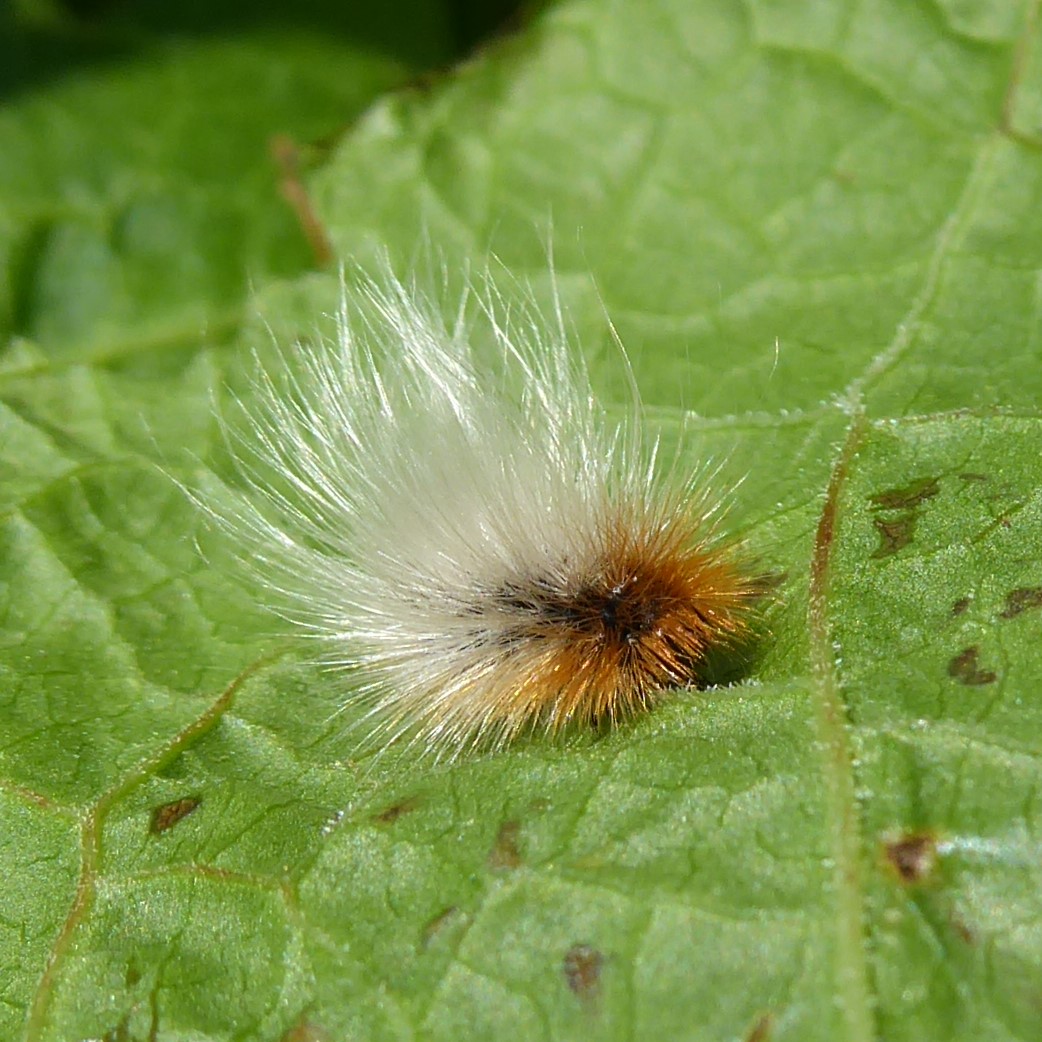
I also spotted this weird looking thing, which appeared to be channeling the spirit of my lockdown hair. I guessed that it was a moth caterpillar of some kind, and social media saved my blushes by informing me it was a Garden Tiger.
The recent bioblitz turned up several records for potter wasps, insects that I wasn't aware were present in Orkney. I was sufficiently intrigued by their fascinating behaviour to want to see it for myself. The adult wasp fashions a 'pot' out of mud, then just before it is complete, she paralyses half a dozen caterpillars and stuffs them in the pot, lays an egg on the hapless cats and seals the vessel. This is Ancistrocerus oviventris.
Whilst we were watching these goings on, something else whizzed by, which when it eventually landed, revealed itself to be a Humming-bird Hawk-moth. Wow!
Nearby was a small colony of Little Terns, which were tricky to photograph as they bathed, fished and courted.
Back at Tense Towers, more butterflies were turning up, as an immigration from Europe seemed to be underway on a south easterly breeze. We managed to count 6 Red Admirals and 2 Painted Ladies (plus yet more Silver Y moths). As the afternoon turned into evening, the butterflies stopped basking in the flower border to soak up the last of the day's rays on the western wall of the house.
What. A. Day.
[Happy sigh]
The cameraman and I met up by a pond at 9am, and despite a chilly breeze blowing from the same direction as the sun, we managed to locate a few damselflies in a warm, sheltered spot. As a bonus, a couple of Large Reds began mating, but it wasn't that kind of film.
On my way home again, I stopped off at another odo site, but there were fewer damsels here, but I did manage to photograph this female Large Red.
I also spotted this weird looking thing, which appeared to be channeling the spirit of my lockdown hair. I guessed that it was a moth caterpillar of some kind, and social media saved my blushes by informing me it was a Garden Tiger.
The recent bioblitz turned up several records for potter wasps, insects that I wasn't aware were present in Orkney. I was sufficiently intrigued by their fascinating behaviour to want to see it for myself. The adult wasp fashions a 'pot' out of mud, then just before it is complete, she paralyses half a dozen caterpillars and stuffs them in the pot, lays an egg on the hapless cats and seals the vessel. This is Ancistrocerus oviventris.
Whilst we were watching these goings on, something else whizzed by, which when it eventually landed, revealed itself to be a Humming-bird Hawk-moth. Wow!
Nearby was a small colony of Little Terns, which were tricky to photograph as they bathed, fished and courted.
| A terning tide |
Back at Tense Towers, more butterflies were turning up, as an immigration from Europe seemed to be underway on a south easterly breeze. We managed to count 6 Red Admirals and 2 Painted Ladies (plus yet more Silver Y moths). As the afternoon turned into evening, the butterflies stopped basking in the flower border to soak up the last of the day's rays on the western wall of the house.
What. A. Day.
[Happy sigh]
Sunday, 14 June 2020
Best foot Forse-wards
Today has been the third foggy day in a row, so we didn't make haste to head outdoors. When we eventually did, about mid-morning, we discovered that the breeze was much lighter and the temperature was a bit warmer. And insects were going nuts. I spent a happy hour or so in the garden photographing hoverflies, bees and moths...
After lunch, we decided that Spring had just about Sprung and there were a few things we needed to see before it was Summer and the opportunity was missed. So we headed off towards the cliffs at Forse. En route, we found several firsts for the year (for us)...
Typically, I'm writing this at 9.15pm and the sun has just come out. Gah!
| I think this is the hoverfly Neoascia podagrica |
| A hoverfly Rhingia campestris |
| A hoverfly Eupeodes corollae (female) |
| The Marmalade Hoverfly Episyrphus balteatus |
| I needed help with the ID of this hoverfly. It's a female Eristalis intricarius |
| This wasp-mimicking hoverfly confused Our Lass, it's a Semicomyia silentis |
| The bumblebees were active too. Here's a couple of Carder Bees and a Great Yellow Bumblebee. |
| Great Yellow Bumblebee |
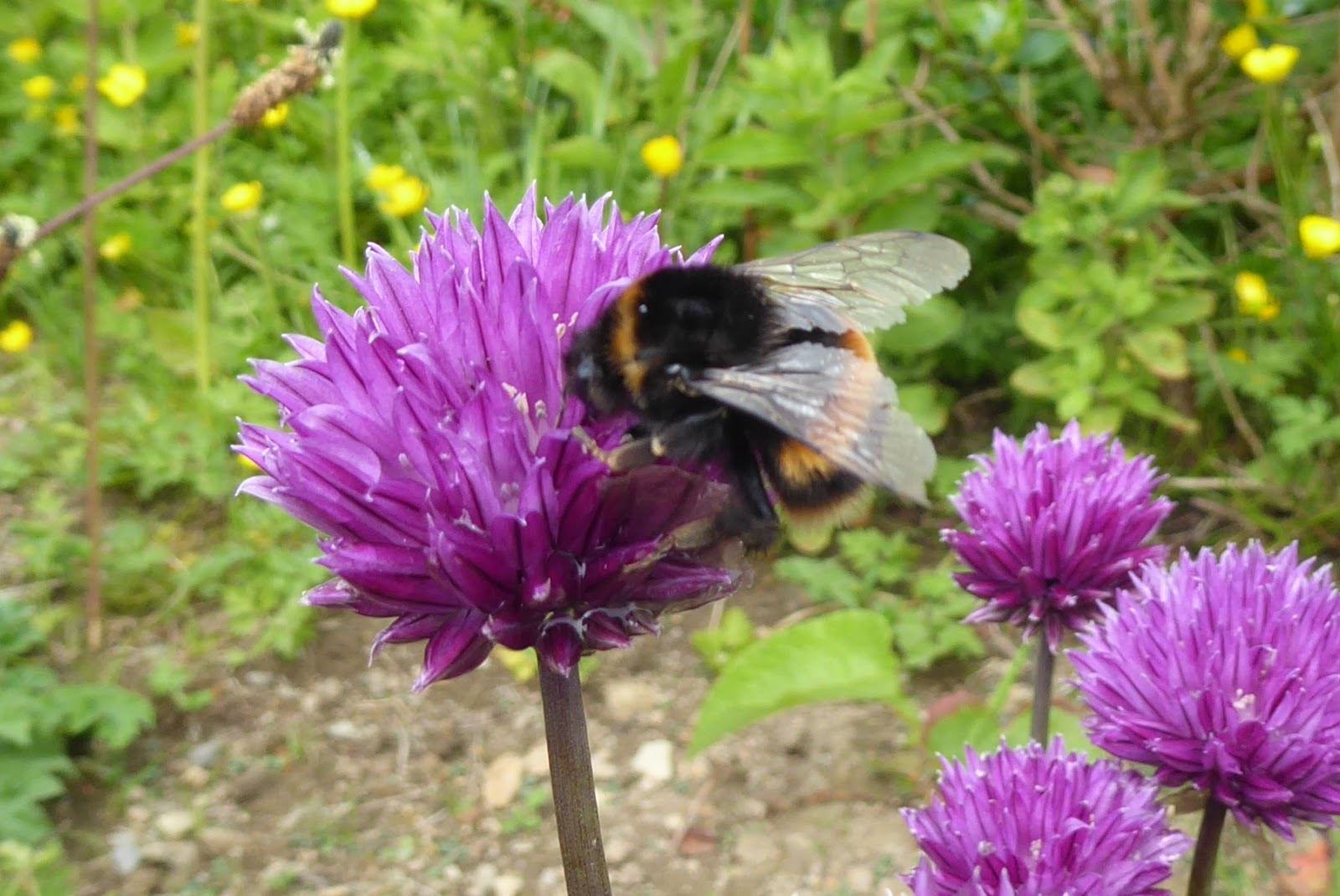
| I think this a Buff-tailed Bumblebee |
| And this must be a Honey Bee from a nearby hive |
| During the last few days, there's been an influx of Diamondback moths |
| And the Silver Y moths probably came on the same south easterly breezes |
| I needed some help with this ID, it's a rather scruffy Hebrew Character |
After lunch, we decided that Spring had just about Sprung and there were a few things we needed to see before it was Summer and the opportunity was missed. So we headed off towards the cliffs at Forse. En route, we found several firsts for the year (for us)...
| Common Blue butterfly |
| Painted Lady butterfly |
| Spring Squill |
| I think this is Angelica, but a rather purple specimen |
| Guillemots |
| Razorbills |
| Redshank |
Subscribe to:
Posts (Atom)